CHD-R – Procedure
Fast determination of the case hardening depth directly on the production lineCHD-R – Curve measurement without sample preparation
The standard CHD measurement is done on a cross-section and requires
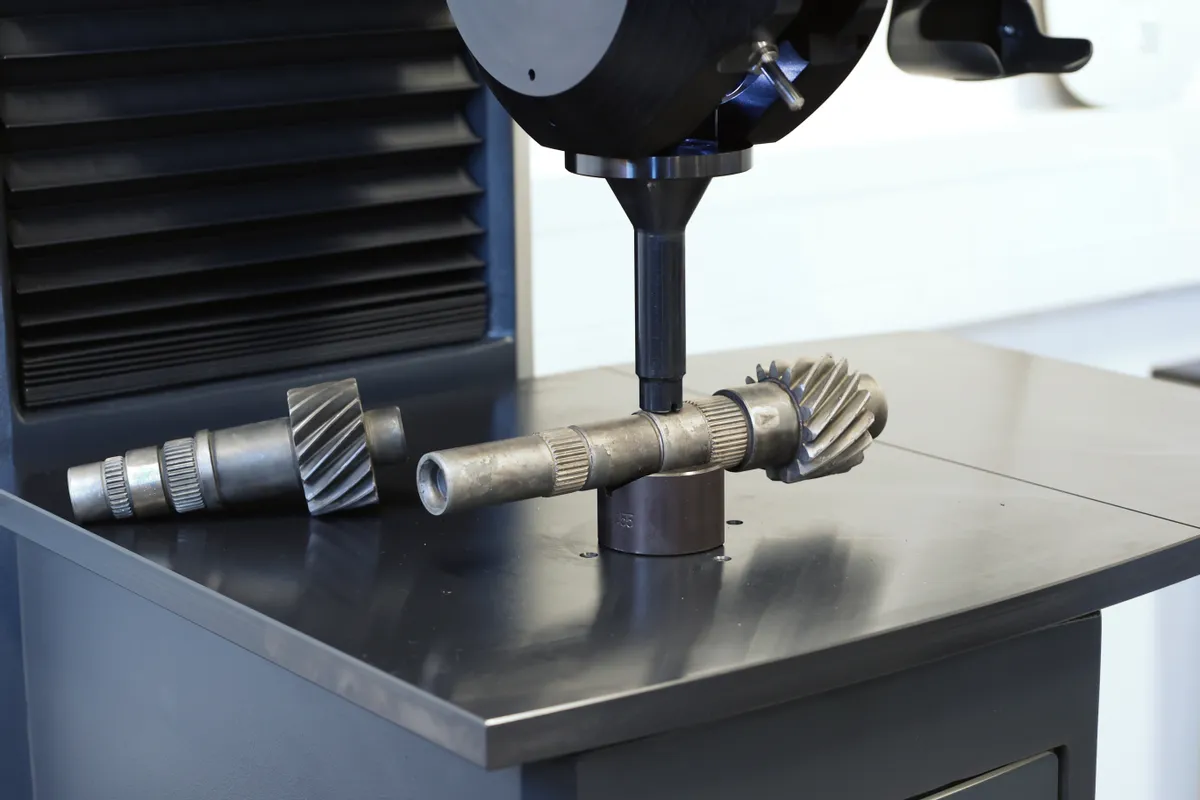
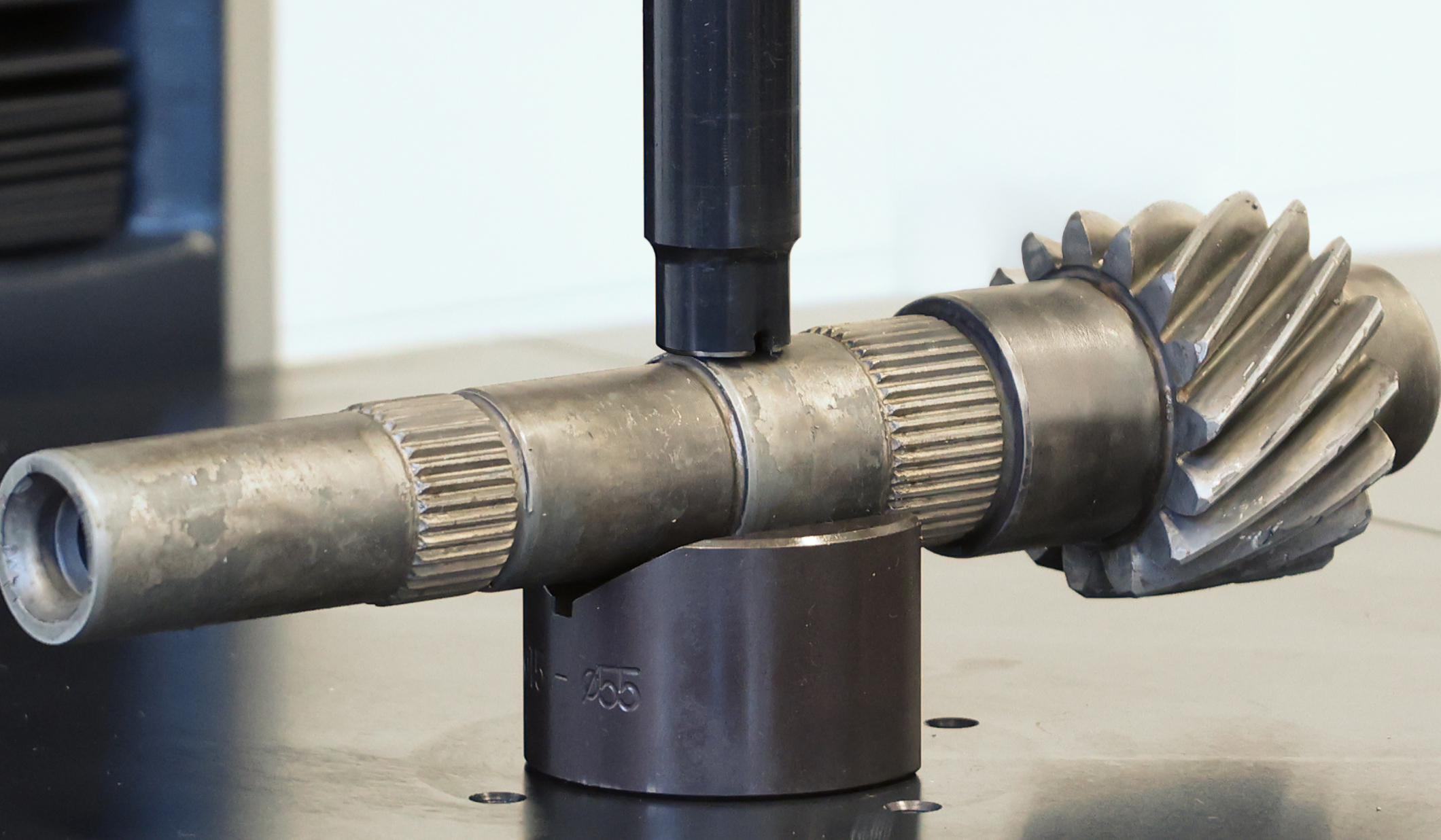
some prep work. CHD-R lets you check the surface layer right on the part
without destructive preparation.
Your benefits:
- No sample preparation necessary
- Results in a single test cycle
- Inline capability up to 100% testing
- Fast process feedback instead of time-consuming laboratory testing
CHD-R supplements the normative CHD determination as a comparative test for process-oriented production control.
Test principle
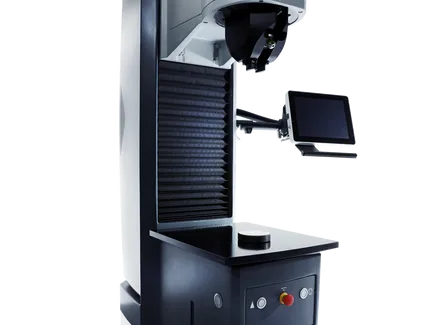
Modified depth difference test based on Rockwell, performed on the DuraVision 300 G5 with CHD-R module.
1. Surface hardness
30 kgf (e.g., HR30N)
CHD-R with 90° diamond; or 120° diamond*
2. Hardness profile
Main force: 500/750 kgf with 90° diamond or 1,000/1,500 kgf with 120°diamond
Hardening depth measurable up to 1.4 mm
The indentation depth depends on the case hardening depth.
The measured reference value is linked to standard CHD values and stored in the template for each material.
Result:
Comparative CHD-R value in mm + surface hardness (HRC/HV)
Required conditions: Reference based calibration
CHD-R requires a normative determination of the case hardening depth (CHD) on a metallographic cross section as reference.
The following are required:
- At least two reference components with similar CHD depths; a higher number improves the reference basis.
- Determination of CHD according to DIN EN ISO 18203 / ISO 6507
- Storage of reference values in the system as templates
- Different templates can be created for different materials and temperature profiles during the hardening process on components.
Requirements for the component
- Minimum thickness ≥ 7 mm
- (or ≥ 10 × indentation depth)
- Flat and accessible test location
- Secure clamping
- Cylindrical parts ≥ Ø 8 mm
- Surface suitable for Rockwell testing
Quality Assurance and Classification
CHD-R is a comparative, non-normative test procedure for production monitoring. The normative CHD determination according to DIN EN ISO 18203 / ISO 6507 remains a reference method.
Calibration and verification:
- The basic device can be calibrated in accordance with EN ISO 6508-2 (Rockwell).
- Regular testing using certified test blocks is recommended.
- Periodic normative CHD accompanying testing on the ground surface ensures the reference basis is maintained in the long term.
Essential classification:
- No standard-compliant calibration of the CHD-R value possible
- Not suitable for external acceptance tests
- No internationally standardized procedure
CHD-R is used for rapid, process-oriented monitoring. The normative CHD determination remains decisive for specification confirmations.
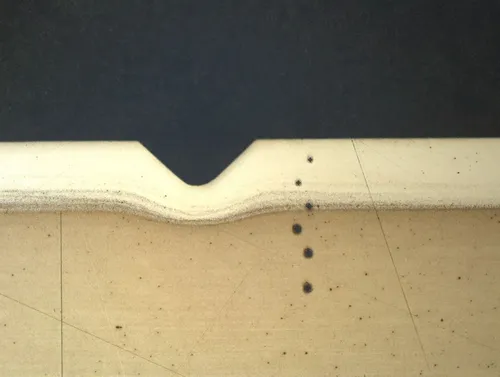
CHD-R impression vs. conventional CHD course
The etched cross-section clearly shows the plastic deformation in the area of the indentation. In addition, the transition from the hardened surface layer through the hardened zone to the base material is clearly visible.
Find out more about the DuraVision